What SOC 2 Type II Certification Really Means for Your Insurance Agency
Introduction
A lot of companies claim to take security seriously. SOC 2 Type II certification is the audit that proves it.
If you're considering bringing a virtual assistant into your agency, you'll hear vendors throw around words like "secure" and "compliant" frequently. Most of the time, those words don't mean much. SOC 2 Type II is different. It means an independent auditor spent months examining how a company handles your data — and found it meets a specific set of standards.
Here's what that actually means for you.
What SOC 2 Is
SOC 2 stands for System and Organization Controls 2. It's a framework developed by the American Institute of CPAs (AICPA) that evaluates how a service organization manages data security, availability, processing integrity, confidentiality, and privacy.
When a company earns SOC 2 certification, it means an independent CPA firm audited their systems and controls. The auditor looked at policies, processes, technology, and real-world behavior — not just what the company claims to do, but what it actually does. This is why SOC 2 Type II paired with individual HIPAA certification is the standard insurance agencies should look for in a compliant VA.
Type I vs Type II: The Important Difference
SOC 2 comes in two versions. Type I is a point-in-time audit. It confirms that the right controls were in place on a specific date. Think of it as a snapshot.
Type II is more rigorous. It covers a period of time — typically six to twelve months. The auditor reviews whether the controls were consistently in place and operating effectively over that entire period.
This distinction matters. A company can pass a Type I audit by cleaning up its systems before the audit date. A Type II audit is much harder to fake because it examines sustained, consistent behavior over months.
When SecureEVAs says SOC 2 Type II certified, that's what we mean. Our controls aren't just documented. They've been independently verified to work, consistently, over time.
What the Auditors Actually Examine
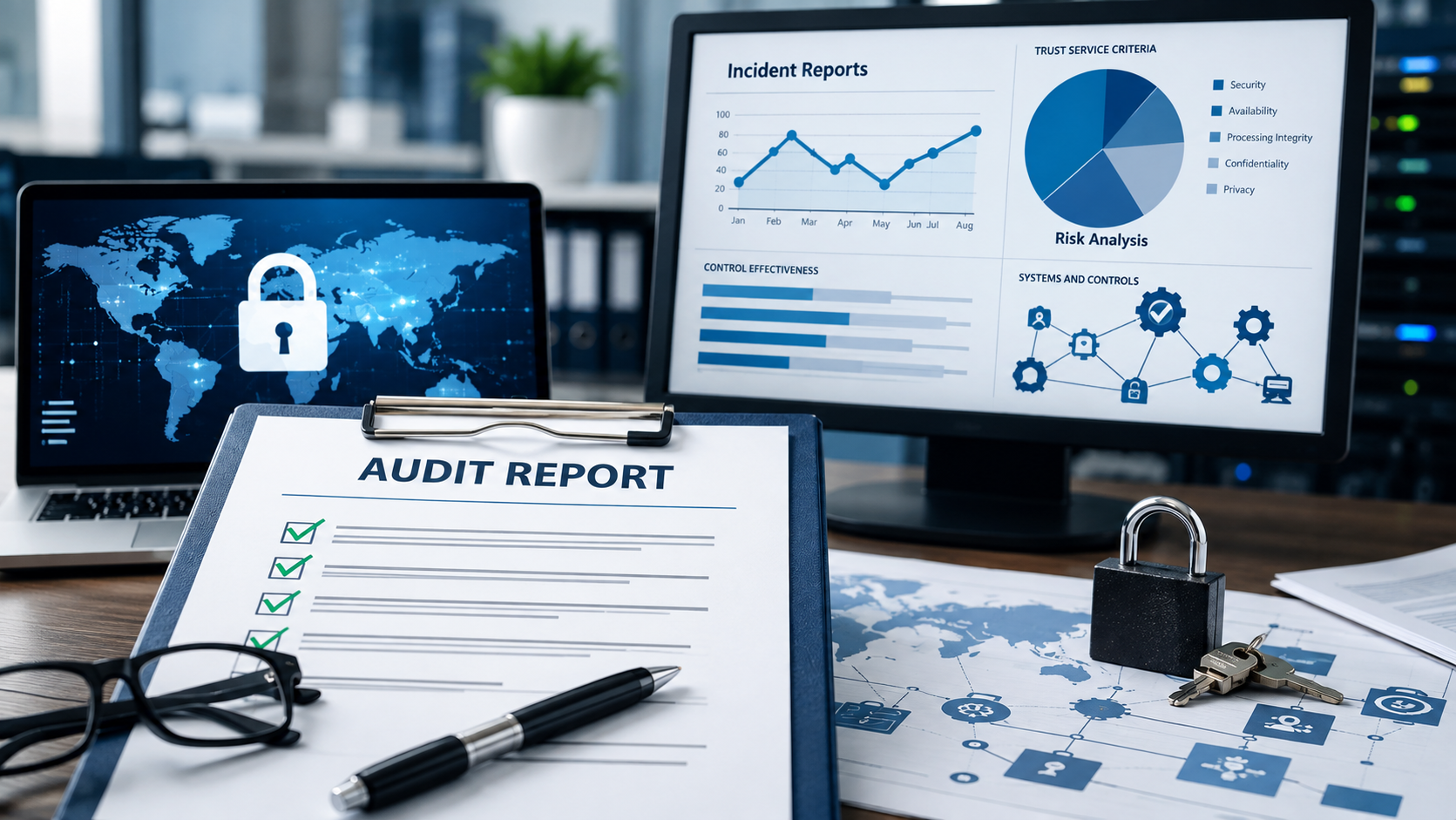
A SOC 2 Type II audit covers five trust service criteria. Most VA companies relevant to insurance focus on security, availability, and confidentiality. Here's what that looks like in practice:
Security: Is access to systems controlled? Are there firewalls, intrusion detection, and encryption? Are employees vetted and trained?
Availability: Are systems reliable and accessible when clients need them?
Confidentiality: Is sensitive data — client names, policy numbers, personally identifiable information — protected from unauthorized access or disclosure?
The auditor doesn't just read the policy manual. They review logs, interview staff, test controls, and verify that the documented practices are actually followed.
Why This Matters More When You Use a VA
When your licensed agents handle client data in your office, you have a reasonable level of visibility into how that data is managed. When you bring in a remote VA, that visibility drops. t's one of the core questions to work through before outsourcing — here's what to ask before you delegate admin work to keep insurance data secure.
If your VA is working from a personal laptop over a home Wi-Fi connection, your client data is on an unsecured device. That creates real exposure — for your clients, for your agency, and for your E&O policy. Understanding how to delegate admin work without creating a security risk is what separates agencies that scale confidently from those that stall.
SOC 2 Type II certification is how you close that gap. It tells you that the company handling your data has been independently verified to manage it responsibly — not just on paper, but in practice.
What to Ask Any VA Provider
Before you sign an agreement with any VA service, ask these three questions:
Are you SOC 2 Type II certified? Can you provide the audit report?
How do your VAs access our systems — through a personal device or a managed, secured environment? This access question is also central to how agencies delegate to a VA without creating a security risk.
Who monitors access to our carrier portals and AMS?
If the answers are vague, that's your answer.
At SecureEVAs, our VAs work inside a virtual machine environment that's fully separate from personal devices. Access is controlled, monitored, and audited. We don't just claim security. We can show you the paperwork.