HIPAA & SOC 2 Compliant VA for Insurance Agencies
Introduction
Many insurance agencies rely on virtual assistants to manage client files, enrollment data, and policy documents. These assistants are organized and quick to respond, which makes them valuable team members. But every one of those tasks can touch protected health information (PHI), and that is where the risk lives.
If a virtual assistant causes a HIPAA breach, the consequences are serious: federal investigations, civil penalties that can reach $1.9 million per violation category in a single year, and lasting damage to your agency's reputation. Insurance agencies handle Medicare supplement applications, health plan enrollments, and underwriting data every day, so compliance is not optional.
Here is the problem. When agencies look for a HIPAA compliant virtual assistant, they assume the term means a specific, verifiable standard. It usually does not. And the agencies that get this right look for two things: individual HIPAA certification and SOC 2 Type 2-audited infrastructure. One without the other leaves a gap. This post explains why.
What HIPAA Compliance Really Requires of a Virtual Assistant
HIPAA does not certify companies. It sets a framework of rules around who handles PHI, how it is stored, transmitted, and accessed, and what happens when something goes wrong. For a virtual assistant to genuinely support HIPAA compliance, several things have to be in place at once:
The individual must understand what qualifies as PHI and how to handle it correctly.
They must work inside a secure technical environment: no personal devices, no shared logins, no unsecured file transfers.
There must be a Business Associate Agreement (BAA) between your agency and their employer.
Workflows must be designed to minimize exposure and maintain audit trails.
Look closely at that list. The first point is about the individual. The rest are about the infrastructure they work inside. That is the whole point: real protection requires both a certified person and a certified environment. HIPAA covers the handling of PHI by individuals. SOC 2 Type 2 verifies that the systems around them actually work. You need both, and most providers offer neither in full.
Company-Level Claims vs. Individual VA Certification
Here is what most VA companies will not tell you. When they say they are HIPAA-compliant, they usually mean the company has a policy, a BAA template, and maybe some training materials. The individual virtual assistant assigned to your account may have watched a 20-minute onboarding video. That is it.
SecureEVAs operates differently on both fronts.
Every Executive Virtual Assistant (EVA) at SecureEVAs holds an individual HIPAA certification. Not a company certificate on a website. Not a team that was briefed once. Each EVA completes certified HIPAA training and passes the required assessment before they ever touch a client account. When your EVA is individually certified, they understand what PHI is, why it is protected, and exactly what they are responsible for. They are not relying on a supervisor to catch a mistake. They have internalized the standard.
Then SecureEVAs backs that person with a SOC 2 Type 2 audited environment, independently verified every year. Most competitors offer company-level assurances. SecureEVAs provides individual accountability inside independently audited infrastructure. That combination is the differentiator.
SOC 2 Type 2 and HIPAA Workflows in Practice
Certification without infrastructure is incomplete. Infrastructure without a certified person is just as incomplete. SecureEVAs pairs the two on purpose.
Dedicated Virtual Machines and Secure Workflows
Every EVA works exclusively on a dedicated, secure virtual machine. No personal devices. No shared logins. No files are downloaded to local desktops. All communication runs through approved, encrypted channels, with daily internal audit checks.
Independent SOC 2 Type 2 Audits, Verified Annually
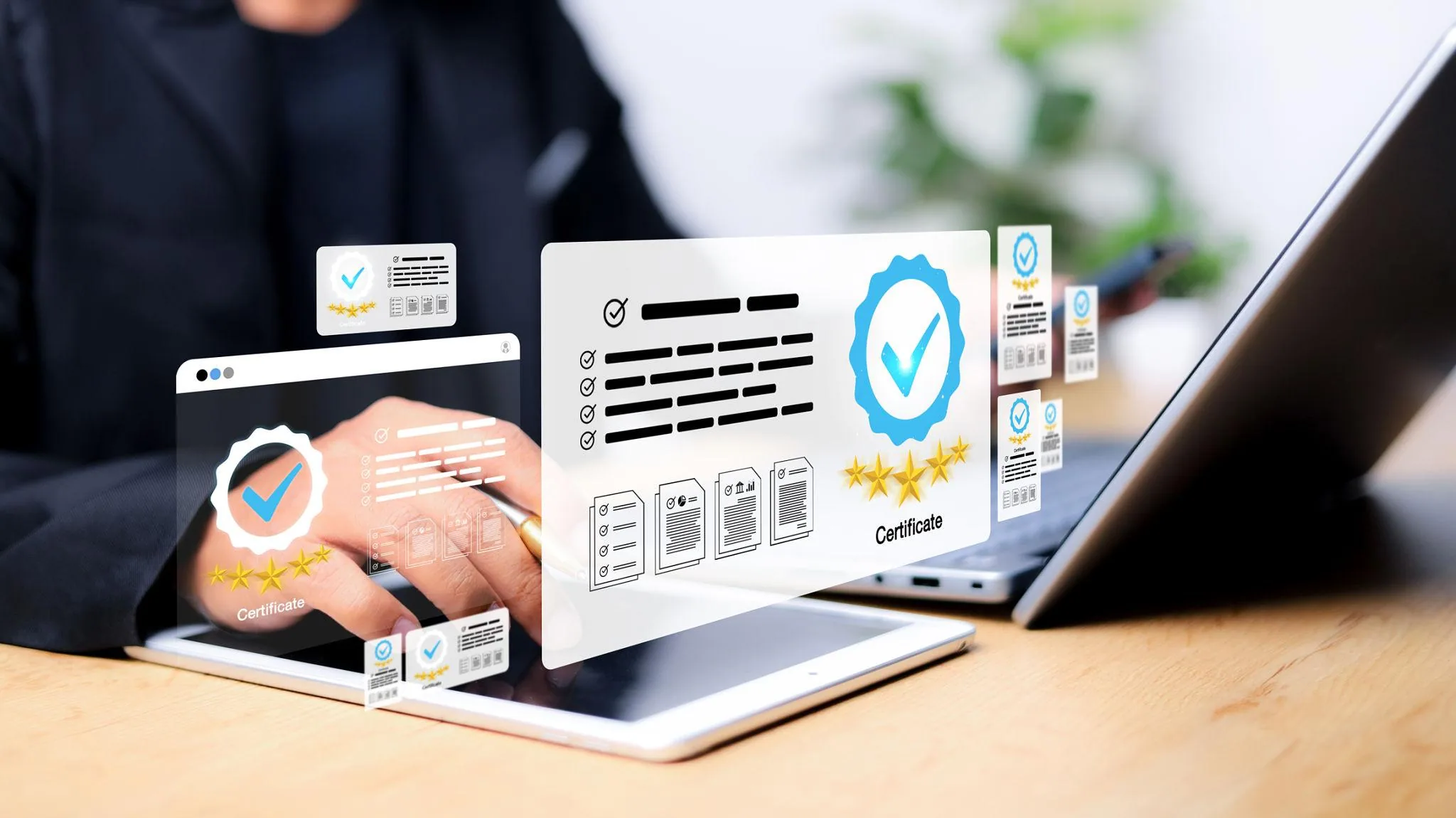
That environment is independently certified to SOC 2 Type 2 and audited annually by an external party. SOC 2 Type 2 is not a self-reported badge. It requires an outside auditor to verify that security controls operate effectively over time, covering access controls, data handling, and system availability. It is the infrastructure layer that sits beneath your EVA's daily work.
Why Individual Certification and Infrastructure Work Together
Put the two together, and the picture is complete: individual HIPAA certification means your EVA is trained and accountable. SOC 2 Type 2 means the system they work in is independently proven to hold up. Your EVA is not just doing the right things. They are doing them inside an environment built and verified to support HIPAA-aligned workflows at every step.
97% EVA Retention Rate Sustains Compliance
One more number worth noting: SecureEVAs has a 97% EVA retention rate. Compliance is not a first-week event. It depends on the same certified, vetted professional working your account month after month — someone who knows your agency's workflows and your clients. High turnover and compliance do not coexist.
Why Insurance Agencies Need Both HIPAA and SOC 2
General businesses can often get by with a standard virtual assistant arrangement. Insurance agencies cannot.
Your agency routinely handles Medicare Advantage and supplement applications, long-term care documents, health underwriting questionnaires, and claims correspondence. Any of these can contain PHI. Your EVA may send an email on your behalf, manage your CRM, handle inbound calls, and coordinate between clients and carriers. Not sure which of those tasks require a license and which don't? Here's exactly what insurance tasks a VA can do without a license.
The exposure surface is wide, which is exactly why a single layer of protection is not enough.
Insurance agencies also face scrutiny from multiple directions: state departments of insurance, federal HIPAA enforcement through the Office for Civil Rights, and the terms of your carrier contracts. A vendor-related PHI incident does not just affect the client. It affects your license, your E&O (Errors and Omissions) coverage, and your agency agreements.
So the standard for insurance is higher by necessity. A certified individual handles PHI correctly. A SOC 2 Type 2-audited environment demonstrates that the systems around it are sound. Choosing an insurance virtual assistant who offers both is not a nice-to-have for a health-sector agency. It is the baseline. The real question is whether the firm you choose has built compliance into the personnel and the infrastructure, or just into the paperwork.
Ready to Work with a Truly Compliant Virtual Assistant?
Most agency owners who find SecureEVAs are not switching because something went wrong. They are switching because they thought carefully about what could go wrong, and they decided not to find out.
Every SecureEVAs EVA is individually HIPAA-certified and operates within a SOC 2 Type 2 audited infrastructure on a secure virtual machine with no personal device access. With a 97% retention rate, the EVA you onboard is the EVA you keep.
If you are ready to work with a virtual assistant who is genuinely built for insurance compliance, the next step is simple.
Schedule a free discovery call at SecureEVAs and we will walk you through exactly how our EVAs are trained, how the onboarding process works, and how we structure SOC 2 Type 2 and HIPAA-aligned workflows for agencies like yours. No pressure. No obligation. Just a clear conversation about what secure, professional EVA support actually looks like.