SOPs and VA Training for Insurance Agency Owners
Introduction
Most insurance agency owners have thought, "It's faster if I just do it myself."
Sometimes that's true in the short term. But over time, this habit turns into a cycle. The owner ends up as the only person who knows how to onboard clients, where files are stored, or how to process renewals without help.
When only one person holds all the knowledge, growth slows. New hires need months to get up to speed. Delegating tasks becomes difficult, and the owner never truly gets a break.
Insurance agency SOPs and clear agency documentation turn one person's know-how into a system everyone can use. They permanently free up leadership time for higher-value activities — and they're what make delegating with SOPs actually work.
The Hidden Cost of Undocumented Processes for Agency Owners
It's easy to overlook how draining it is to be the agency's go-to manual. Each time a team member asks how to handle a claim follow-up or where to save a document, the owner has to stop and explain. When tasks are done differently because no one knows the right way, mistakes start to happen.
According to a Time Etc survey, entrepreneurs who regularly delegate administrative work saw average revenue growth of 143% over two years — nearly double the 80% growth reported by those who don't delegate as much. But delegation only works when the instructions are clear.
Agency documentation turns unclear expectations into clear, repeatable steps. It removes guesswork, reduces mistakes, and lets anyone — a VA, a new hire, or even the owner on a busy day — get things done the right way every time.
Create SOPs for Insurance Agency Workflows
Standard operating procedures are step-by-step checklists for tasks the agency performs repeatedly. Client onboarding, renewal follow-ups, claims intake, CRM updates — these are all candidates for insurance agency SOPs.
Without written procedures, everyone does things differently. This leads to missed steps, unhappy clients, and possible compliance issues. SOPs give everyone one clear way to do things. They also make it easier to train new team members and keep work running smoothly when someone is away.
A virtual assistant can manage the documentation process. They identify frequently performed tasks and designate them for documentation. For each one, they break it down into simple steps, using clear language anyone can follow.
A well-structured SOP includes:
Purpose: Why the task matters to the agency.
Step-by-step instructions: Numbered actions with clear next steps.
Tools needed: Which software, logins, or documents are required.
Definition of done: What the finished task looks like.
Best practices: Tips to avoid common mistakes.
The VA also sets regular reminders, such as every quarter, to review each SOP with the owner and update it if anything has changed. This keeps documentation current and useful. For agencies just starting out, proven templates and examples can accelerate the process.
Turn Screen Recordings into Reusable SOPs
Some processes are hard to capture with words alone. Complex software workflows, multi-step system configurations, or visually driven tasks can be frustrating to describe in text.
Screen recordings capture a workflow in action. Tools like Loom allow a VA to record a walkthrough with narration. Scribe automatically converts clicks into a step-by-step guide with screenshots. Visual guides are often easier to follow than written instructions, especially for tasks that use unfamiliar software. They save time because the person creating the guide simply records themselves performing the task, and new team members can watch the video and follow along with the written steps.
A VA can use Loom to record themselves doing a task, such as pulling a renewal report in the agency management system. They explain what they're doing and why each step is important. The video is saved in a shared folder for everyone to access.
For tasks that work better as a written guide, the VA uses Scribe. They click through the task, and Scribe automatically generates a document with screenshots and step descriptions. The VA then reviews the guide, adds clarifying notes, and organizes it with the rest of the agency documentation.
Using both visual and written instructions builds a learning library that new team members can use right away. For examples of how other agencies organize these resources, see this guide to agency SOPs that are actually used.
Build a VA Maximization Handbook for Your Agency
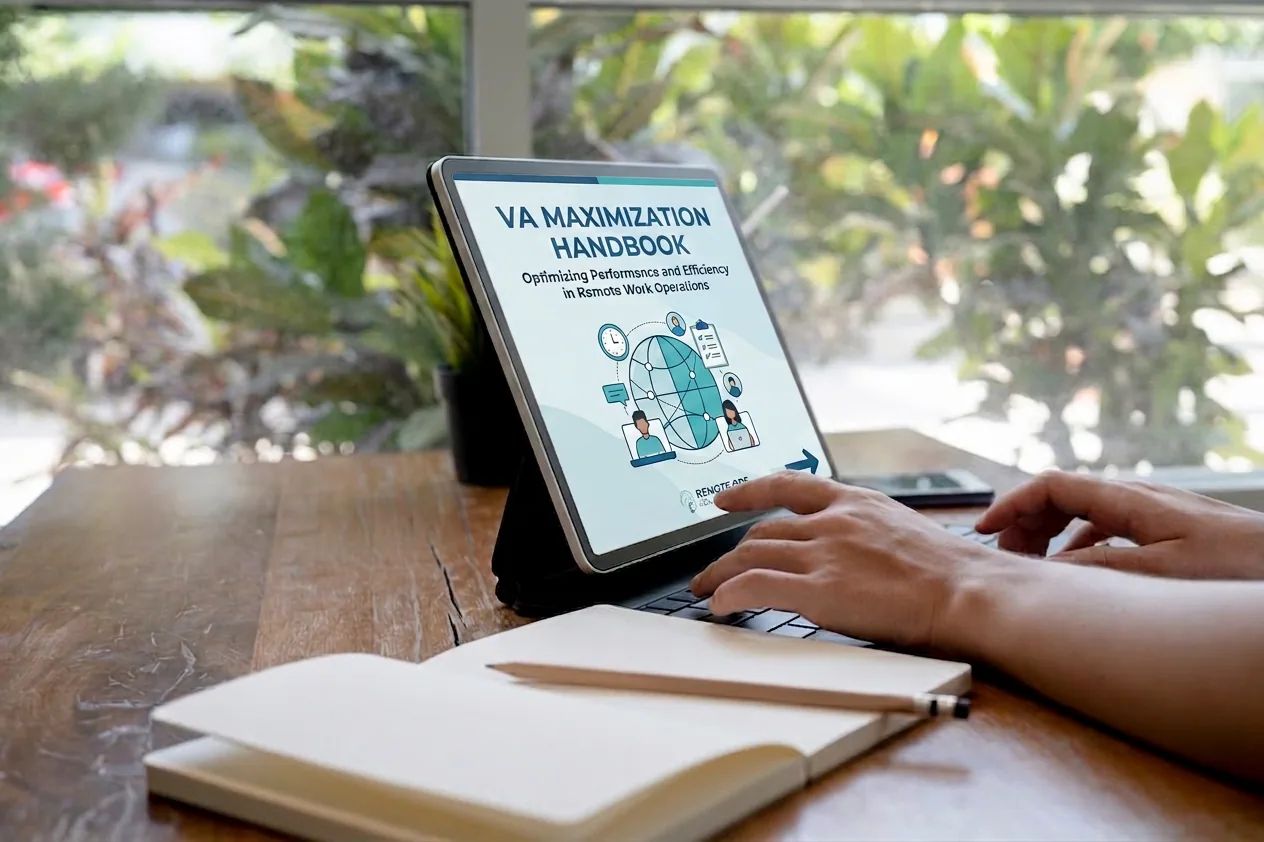
SOPs work well for single tasks, but agencies also need a bigger-picture guide that explains how work should flow, why it matters, and when to get help. That's where a VA Maximization Handbook comes in.
A VA Maximization Handbook is a comprehensive document that defines each major area of the agency's operations. For every recurring function, it answers:
What the project is: A clear definition of the work.
Why it matters: The business value behind it.
How to execute: The detailed SOP.
Definition of done: The expected outcome.
Escalation rules: Exactly when and how to involve leadership.
This handbook helps a VA work independently. With clear expectations written down, there's no confusion about priorities or quality. The VA knows what success looks like, when to ask the owner for help, and when to handle things on their own. It functions as a complete VA training handbook the team can rely on from day one.
The VA can draft each section using the template above and work with the owner to fill in details. They organize the handbook in a shared document like Google Docs or Notion that is easy to search and update.
A key part of this system is a living task backlog. The owner or VA keeps a shared board, such as Trello, Asana, or a Google Sheet, where any task that doesn't need the owner's time is listed. Scheduling, minor data entry, and personal errands all go into the backlog. The VA regularly reviews the backlog, identifies tasks that can become SOPs, and adds them to the handbook over time.
As time goes on, the backlog gets smaller, and the handbook gets bigger. The agency becomes more organized, and the owner moves from doing tasks to overseeing them.
Making SOPs Stick Long-Term in Your Agency
Documentation only helps if people use it. Building a system is one thing — protecting it so the agency actually relies on it over the long term is another. That system also sets the stage for getting real value from a VA in the first 30 days.
Building a Documentation Culture Around Your SOPs
Agencies that succeed with insurance agency SOPs stick to a few simple rules:
New team members start learning from the documentation on their first day. They don't just copy what others do — they learn directly from the written instructions.
SOPs are kept up to date. When a process changes, the documentation is updated right away, not just at the next quarterly review.
Following the documented process is the rule. If someone finds a better way, they write it down first, then start using it. This way, the system improves on purpose, not by accident.
A VA can help protect this culture. They check that everyone follows the process, point out outdated steps, and suggest improvements. They also ensure new ideas from the team are incorporated into the documentation.
The Long-Term Payoff of Insurance Agency SOPs
A single SOP might save a few minutes now and then. But a complete documentation system can change how an agency works.
New hires get up to speed in days, not weeks. Tasks are done right every time. The owner can focus on leading the business rather than on daily operations. And when it's time to grow — adding a new team member, opening another location, or expanding services — the systems are ready to support that growth. That shift in focus is exactly what an executive virtual assistant for insurance agency owners is designed to protect.
Documentation isn't just extra work. It's the foundation that helps an agency grow.
Ready to Build Your Agency's Documentation System?
Agency owners didn't start their businesses just to be the only ones who know how everything works. They built them to serve clients, build relationships, and create lasting value.
Building a documentation system can seem overwhelming, so it's best to start small. Choose the task the owner explains most often — client onboarding, claims intake, or renewal follow-up. Document it this week using a simple Google Doc. Add screenshots. Write it as if the reader knows nothing about the agency. Then give it to the VA and ask, "Follow this and tell me where it's confusing." This feedback loop will improve documentation faster than anything else.
SOPs and a strong VA training handbook capture expertise, multiply impact, and free owners from the repetitive tasks that keep them small. Start with one process, then another. Over time, the agency runs whether the owner is in the room or not — and that's the definition of freedom.
Talk to an expert at SecureEVAs today and find out how documentation and SOPs could change your agency's operations. There's no pressure — just a conversation about what's possible when your systems work as hard as your team does.