How Insurance Agencies Use a VA to Manage Their CRM
Your CRM should be one of the most valuable tools inside your insurance agency.
It should tell your producers which prospects need attention, when a client was last contacted, what follow-up is due, and where each opportunity stands.
But a CRM is only useful when the information inside it is accurate.
A lead comes in and never gets assigned. A producer has a conversation but forgets to log it. A client changes their contact information, but the old details remain in the system. A follow-up reminder gets discussed but never created.
Each issue seems small.
Over time, those small gaps create a CRM your team no longer trusts.
And when producers stop trusting the CRM, they start managing relationships through emails, spreadsheets, personal notes, and memory.
That creates unnecessary work and increases the chance that opportunities are missed.
A trained insurance virtual assistant can help solve this problem by managing the administrative side of CRM maintenance — keeping records updated, tracking follow-ups, organizing pipeline information, and making sure producers have the information they need when they need it.
The Problem With an Outdated CRM
Most agency owners understand the importance of having a CRM.
The challenge is maintaining it.
Producers are focused on selling, meeting clients, handling renewals, and managing existing relationships. Updating records often becomes a task that gets pushed aside when priorities compete.
The result is predictable:
Leads without follow-up notes
Client records with outdated information
Opportunities with no clear next step
Duplicate contacts
Missing referral information
Incomplete activity history
This creates more than an organizational problem.
It affects revenue.
A producer who spends time searching for information is spending less time having conversations that move the business forward.
As we discussed in our article on the true cost of DIY administrative work for insurance agency owners, the cost of administrative tasks is not only the time spent completing them. It is also the revenue-producing work that gets delayed because your licensed team is handling tasks that could be delegated.

What CRM Management Actually Means for an Insurance Agency
CRM management is more than entering contact information.
For an insurance agency, the CRM supports the entire relationship lifecycle — from the first inquiry to ongoing client communication.
A trained VA can help manage several important areas.
Maintaining Client and Prospect Information
Insurance relationships change constantly.
A prospect becomes a client.
A business adds new contacts.
A client changes their phone number or email address.
A referral partner sends a new opportunity.
Someone needs to keep those records accurate.
A VA can support CRM maintenance by handling tasks such as:
Adding new prospects and clients
Updating contact information
Completing approved record fields
Organizing account details
Maintaining referral source information
Reviewing records for missing information
Standardizing data entry practices
The goal is simple:
When a producer opens a record, they should be looking at information they can trust.
Logging Client and Prospect Activity
A CRM becomes valuable when it shows the history behind a relationship.
A client call happened.
A prospect requested additional information.
A renewal discussion took place.
A follow-up was promised.
Without proper documentation, those conversations disappear.
A VA can help maintain activity records by organizing approved notes, updating CRM activities, and ensuring important interactions are documented according to agency procedures.
This creates visibility across the team.
If another employee needs to assist with an account, they do not have to start from zero. They can review the CRM history and understand what has already happened.
Strong documentation also supports better client service. SecureEVAs discusses how consistent communication and organized follow-up can improve the customer experience in its article on how a virtual assistant can improve client retention for insurance agencies.
Keeping the Sales Pipeline Organized
A pipeline should answer important questions:
Where is this prospect?
What happened during the last conversation?
What needs to happen next?
Who owns the next step?
When pipeline information is outdated, producers spend time reviewing emails and trying to reconstruct conversations.
A VA can help keep the pipeline organized by:
Updating opportunity stages
Recording approved information
Tracking follow-up activities
Organizing prospect details
Identifying opportunities that need attention
Maintaining accurate pipeline records
The VA is not replacing the producer's sales process.
They are making sure the producer enters the conversation prepared.
This is especially valuable for agencies that receive a steady flow of inbound opportunities. A VA can support the administrative side of lead management, including initial follow-up, information gathering, and appointment coordination, as explained in our guide on lead generation support for insurance agencies.

Managing Follow-Up Tasks
Insurance sales and client service depend heavily on follow-up.
"Let's reconnect next month."
"I'll send that information tomorrow."
"Reach out before renewal."
These commitments happen every day.
The challenge is making sure they do not get forgotten.
A VA can help create and manage follow-up tasks inside the CRM so important conversations continue moving forward.
They can monitor outstanding activities, organize reminders, and help ensure the appropriate team member knows what requires attention.
The producer still owns the relationship.
The VA helps protect the process around that relationship.
Cleaning Up Duplicate and Outdated Records
CRMs naturally become cluttered over time.
The same contact may exist multiple times.
Old prospects may remain active.
Important fields may be incomplete.
Information may be inconsistent across records.
A VA can help maintain CRM accuracy by:
Identifying duplicate records
Reviewing outdated information
Standardizing formatting
Updating approved information
Organizing incomplete records
Flagging items that require internal review
The goal is not simply a cleaner database.
The goal is a CRM that your team can actually use.
Tracking Referral Sources
Many insurance agencies grow through referrals.
But referral relationships are difficult to measure if they are not recorded consistently.
A VA can help track where opportunities come from by maintaining referral information inside the CRM.
Over time, this helps agency owners understand:
Which referral sources generate business
Which relationships need more attention
Which marketing efforts produce opportunities
Where growth opportunities exist
A CRM should not only store information.
It should help agencies make better decisions.
CRM and AMS Management Go Together
Many insurance agencies use both a CRM and an agency management system.
The AMS typically contains policy information, documents, servicing activities, and insurance-specific records.
The CRM often focuses on relationships, prospects, sales activity, and follow-up.
The challenge is keeping both systems aligned.
A new client may be entered into the AMS after a policy is issued but still remain listed as an open prospect in the CRM.
A contact update may happen in one system but not the other.
A producer may record important relationship information that needs to be reflected in another platform.
A VA can help coordinate these updates based on your agency's documented processes.
For agencies using systems such as Applied Epic, AMS360, EZLynx, or HawkSoft, understanding what can be delegated is important. Our guide on what a virtual assistant can do in Applied Epic, AMS360, and EZLynx explains how trained insurance VAs support common agency management workflows.
The Importance of Documented CRM Processes
The technology is only part of the equation.
The process matters more.
Before assigning CRM responsibilities to a VA, agencies should define:
Which information belongs in the CRM
Which information belongs in the AMS
How leads should be categorized
How activities should be documented
What pipeline stages mean
When follow-ups should be created
Which situations require escalation
Without clear processes, even experienced employees may maintain the CRM differently.
A documented workflow gives everyone the same standard.
This is why successful VA implementation starts with clear onboarding. Our guide on how to onboard a virtual assistant in an insurance agency explains how agencies can create workflows, establish expectations, and gradually expand responsibilities.
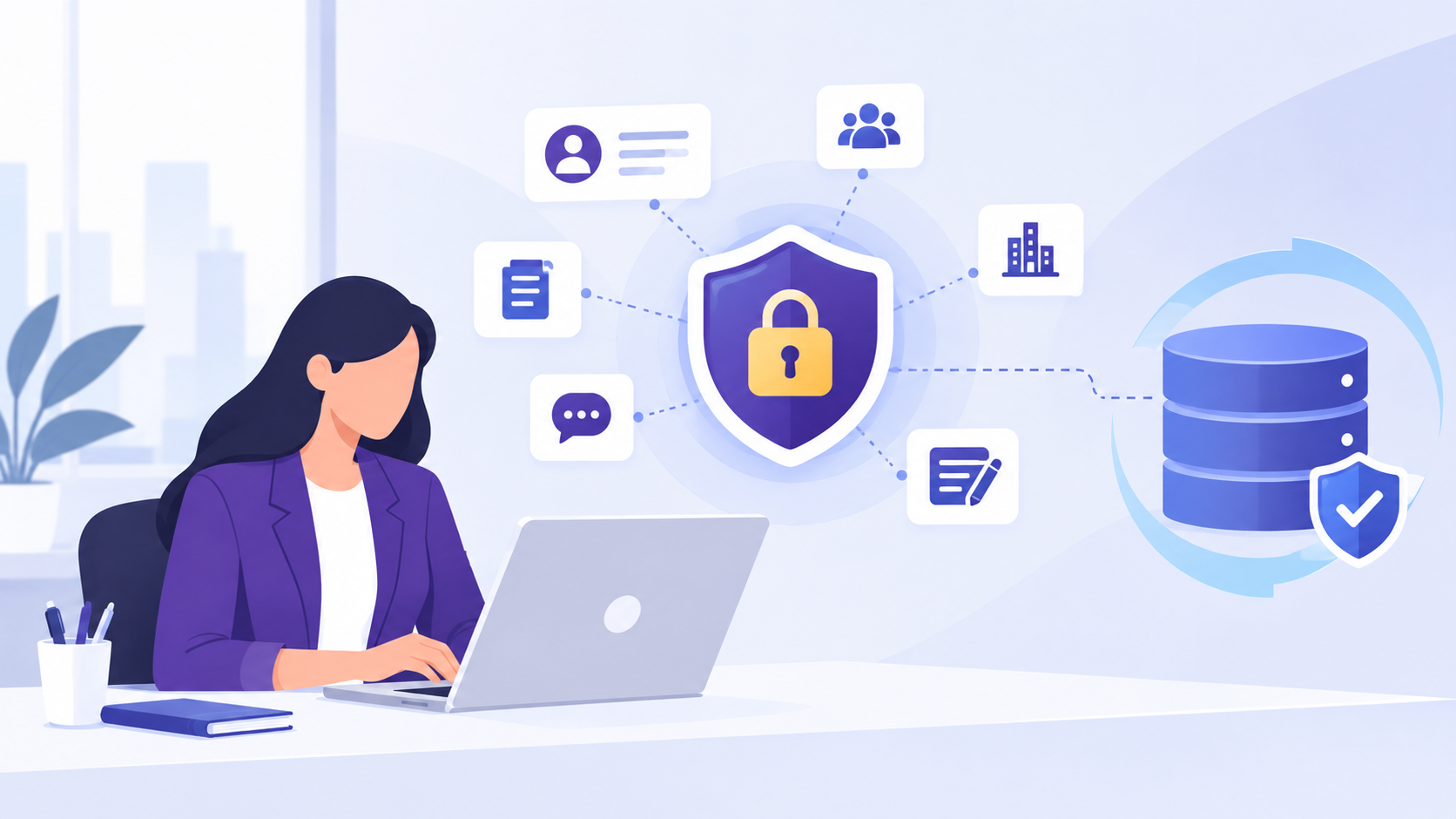
Protecting Client Information Inside Your CRM
CRM management also involves access to sensitive information.
Depending on the agency, a VA may see:
Client contact information
Prospect details
Communication history
Business information
Relationship notes
If the VA also works inside the AMS or carrier portals, the level of access may be even greater.
Security should be considered before access is provided.
Agencies should understand:
What systems the VA needs access to
What permissions are appropriate
How activity is monitored
How access is removed when responsibilities change
Whether data is protected outside the agency environment
This is why security infrastructure matters when choosing a VA provider. SecureEVAs explains the difference between basic remote access and stronger security controls in its article on what SOC 2 Type II certification means for insurance agencies.
Let Producers Focus on Relationships, Not Record Maintenance
A CRM should help producers sell.
It should not become another administrative burden.
The challenge for many agencies is not having a CRM.
The challenge is keeping it accurate enough to be useful.
A trained insurance VA can help manage the administrative work behind CRM success:
Updating records
Logging activities
Maintaining pipeline information
Tracking follow-ups
Cleaning outdated data
Coordinating CRM and AMS updates
Supporting better visibility across the agency
Your producers still own the client relationships.
They still make coverage decisions.
They still handle the conversations that require their expertise.
The VA simply helps ensure the system supporting those relationships stays organized.
Because when your CRM works properly, your team spends less time searching for information and more time building relationships.
Talk to SecureEVAs about CRM and AMS management for your agency